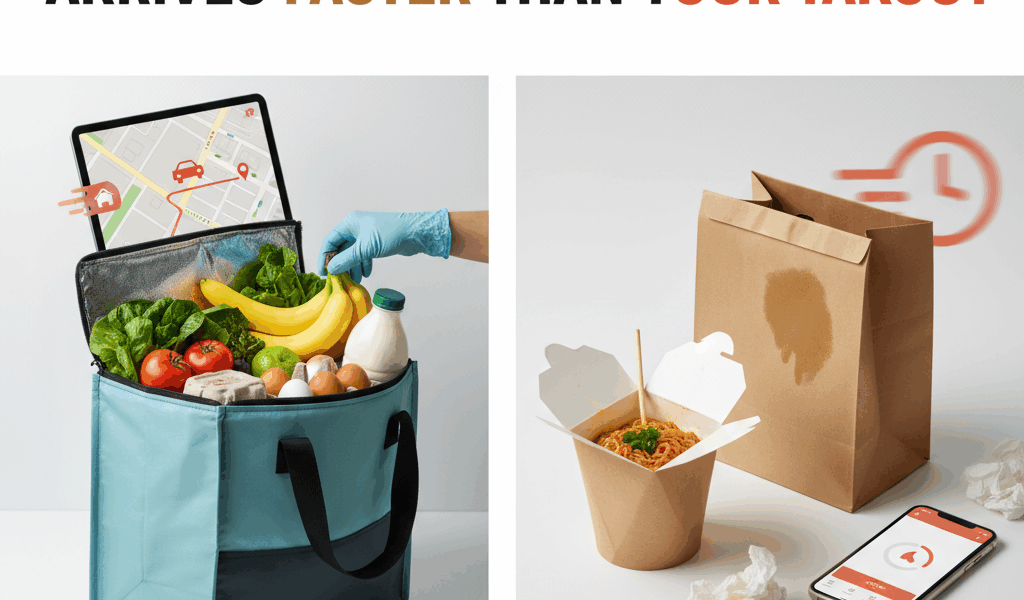
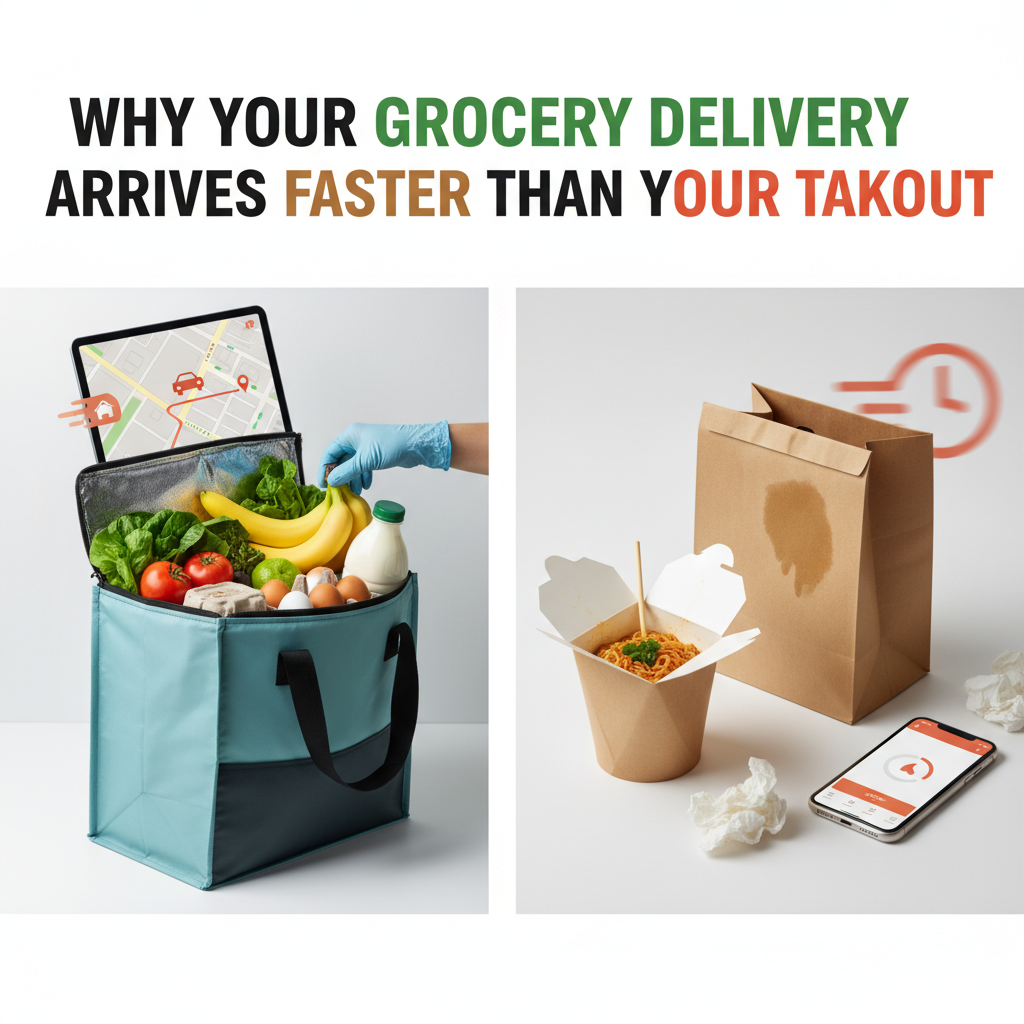
Grocery delivery and restaurant delivery look like the same thing from a consumer perspective — you open an app, you order food, someone brings it to you. As someone who spent a while wondering why my Instacart order consistently arrived in 25 minutes while my Uber Eats order from a closer restaurant took 45, I learned that the two systems are built on completely different logistics models. Today I’ll explain the difference.
The Fulfillment Chain Is Completely Different
When you order groceries, a shopper goes to a store, picks your items from existing inventory, and drives to you. The total time is: travel to store + shopping + travel to you. The store has everything in stock, the shopper moves through a known layout, and the process is optimized by software that plots the most efficient picking route through the store.
When you order restaurant delivery, the chain is: restaurant receives order → kitchen prepares food → food sits waiting for driver → driver picks up → driver travels to you. The kitchen step is unpredictable. A restaurant that’s handling 15 simultaneous delivery orders alongside a full dining room is going to be slower than one that’s quiet. The driver assignment happens in parallel with cooking, which means a driver sometimes arrives before the food is ready and waits — adding time that doesn’t show up in the initial estimate.
Inventory Certainty vs. Preparation Uncertainty
Grocery delivery’s main uncertainty is inventory — items can be out of stock, requiring substitutions. Restaurant delivery’s main uncertainty is preparation time — the estimate assumes a certain kitchen speed that may or may not reflect reality at the moment you ordered. Grocery delivery services have largely solved their inventory problem by integrating real-time stock feeds from stores. Restaurant delivery services can’t predict kitchen speed with the same precision because it varies with demand. That’s what makes the grocery logistics model endearing to operations engineers — it’s a solved optimization problem. Restaurant delivery still has meaningful unpredictability baked in.
The Last Mile Is the Same, But the Matching Is Different
Both types of delivery use gig workers for the final delivery step. The difference is in how driver-order matching works. Grocery orders are typically matched after shopping is complete, so the driver assignment moment is predictable. Restaurant orders are matched during preparation, which means drivers are sometimes dispatched early (leading to waiting) or late (leading to cold food). Getting the matching timing right is one of the harder optimization problems in restaurant delivery logistics.
Why Grocery Delivery Is Often Cheaper Per Order
Grocery delivery operations benefit from high order density — many items per trip, high average order value. A $120 grocery delivery covers the logistics cost more easily than a $25 dinner delivery. Probably should have led with this, honestly — it explains why restaurant delivery fees feel high relative to order value in a way that grocery delivery fees don’t, and why restaurant delivery relies more heavily on tips to make driver compensation work at low order values.

Leave a Reply