
The sizzle of a wok, the precise moment when onions turn golden, the instinct that tells an experienced cook to add more salt – these have always been deeply human skills. Now artificial intelligence is learning them too, and the results are reshaping commercial kitchens worldwide.
Smart Kitchens Are Already Here
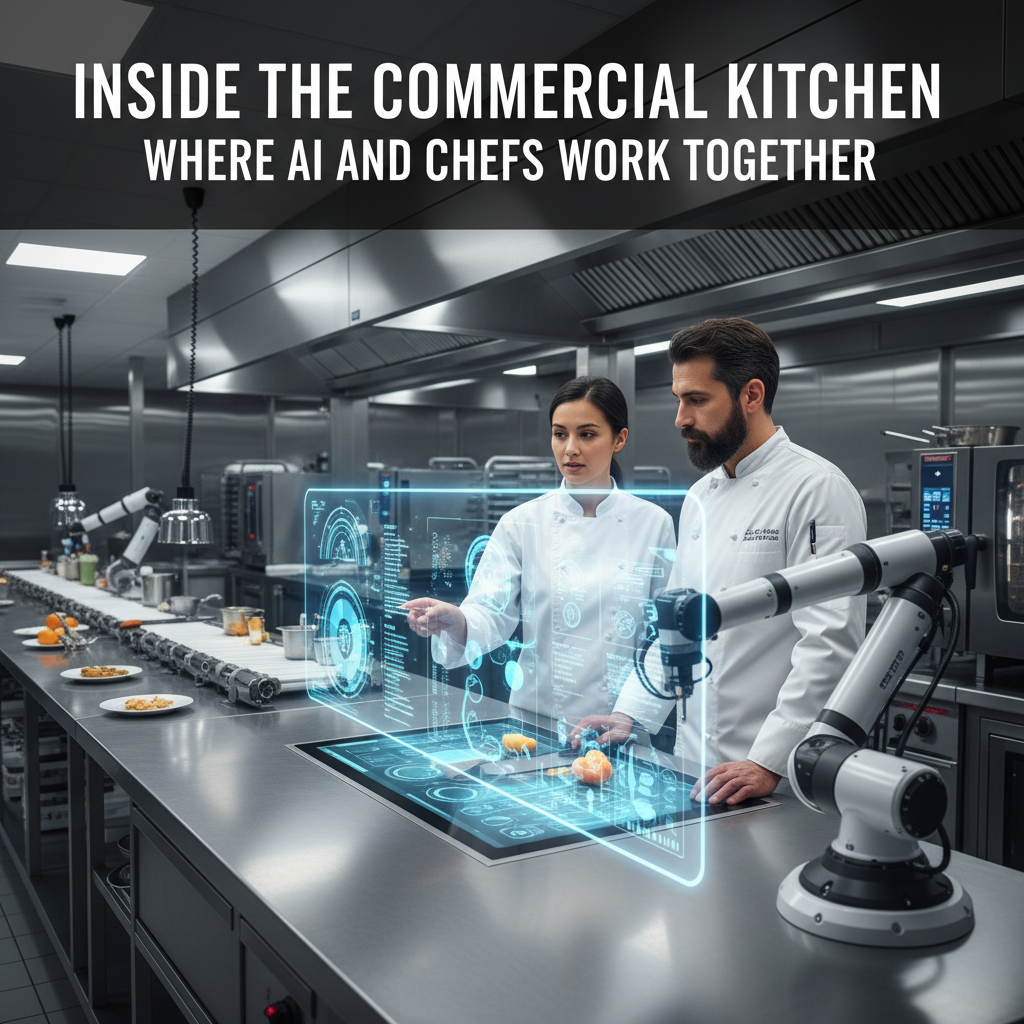
Visit any major chain restaurant’s kitchen and you’ll find AI working alongside human cooks. Temperature sensors connected to machine learning systems monitor every cooking surface. The system knows when oil reaches perfect frying temperature and alerts the line cook. It tracks how long each protein has been on the grill.
This isn’t about replacing cooks. It’s about consistency. A burger at the Houston location should taste identical to one in Portland. AI makes that possible without requiring years of training for every line cook.
The technology started with quality control. Cameras analyze each plate before it leaves the kitchen. Does the presentation match the standard? Are portion sizes correct? Is the color right? These checks happened manually before, but humans get tired. AI doesn’t.
Waste Reduction Results
Food waste crushes restaurant margins. AI inventory systems now predict demand with startling accuracy, factoring in weather forecasts, local events, even social media trends. One casual dining chain reduced food waste by 28% in the first year of AI implementation.
The savings compound. Less waste means lower food costs. Better predictions mean fresher ingredients. Fresher ingredients mean better food. Better food means happier customers. It’s a virtuous cycle that AI enables but doesn’t control.
Fine Dining Gets Analytical
High-end restaurants are adopting these tools too, though they’re quieter about it. One three-Michelin-star kitchen uses AI to analyze the flavor compounds in each dish, ensuring the tasting menu flows correctly from course to course.
The chef still creates. The AI advises. It might suggest that the acid level in course four could be reduced to better prepare the palate for course five. The chef decides whether to take the advice.
Some sommeliers now consult AI for wine pairings, particularly with unusual dishes. The system has analyzed thousands of successful pairings and can suggest options a human might overlook. Again, the sommelier makes the final call.
Training the Next Generation
Culinary schools are integrating AI tools into their curriculum. Students learn traditional techniques alongside modern technology. They’re trained to use AI as a tool, not a crutch.
One school has students develop recipes with AI assistance, then prepare them completely from scratch without any technological help. The contrast is educational. AI can suggest combinations, but only hands-on practice builds the physical skills cooking requires.
The goal is producing cooks who understand both worlds. They can troubleshoot a malfunctioning sensor and also know when to trust their instincts over the data.
What Comes Next
Robotics is the obvious extension. Some kitchens already use automated arms for repetitive tasks – flipping patties, dropping fries, portioning ingredients. These aren’t replacing skilled cooks but handling the tasks that lead to repetitive stress injuries and burnout.
The more interesting development is predictive cooking. AI systems are learning to anticipate orders before they’re placed. If the data suggests 40 people will order the salmon in the next hour, preparation can begin in advance.
Ghost kitchens – delivery-only operations – are the perfect testing ground. Without a dining room to manage, these operations can focus entirely on kitchen efficiency. AI optimization matters more when your only product is the food itself.
The Human Element Remains
For all this technology, the restaurants people love most still depend on human creativity. The chef who invents a new dish, the server who remembers your name, the bartender who knows your drink – these remain irreplaceable.
AI handles the mechanical. Humans provide the soul. That division of labor might be the template for how this technology evolves across all industries. The work changes, but work remains.



Leave a Reply