The Short Answer Most People Never Get
Instacart pricing is genuinely confusing these days with all the misinformation flying around. As someone who spent three months obsessively comparing app prices to in-store receipts, I learned everything there is to know about why your grocery total looks nothing like what you’d pay at the register. Today, I will share it all with you.
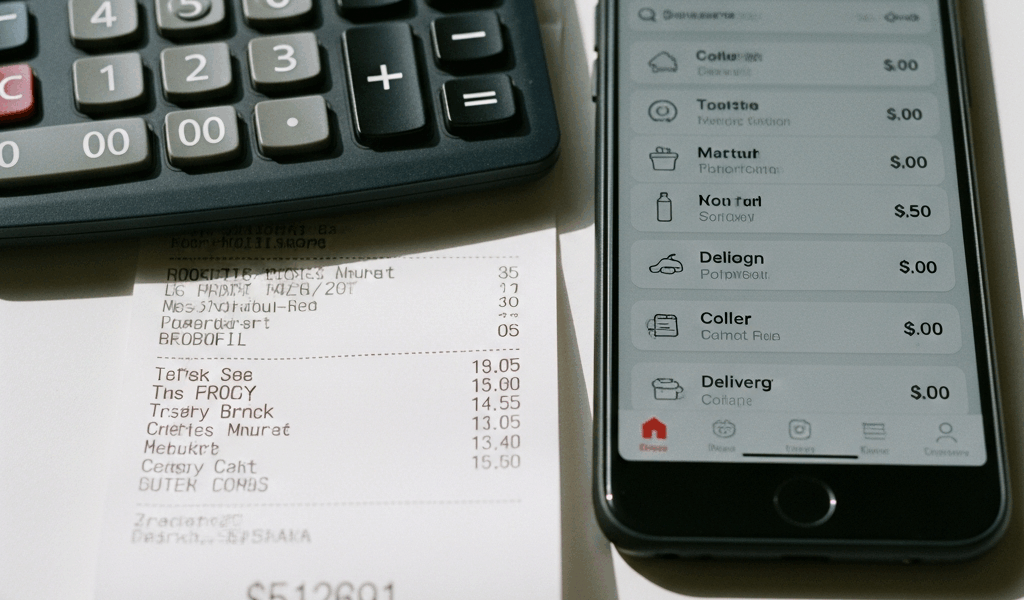
Here’s the part no one tells you upfront: you’re typically paying 25–40% more than you would in person. Retailers mark up item prices directly on the platform. Instacart stacks its own fees on top of those. Then comes the tip. Each layer is real, each one is intentional, and — honestly — none of it is hidden. It’s just buried where most people never look.
Item Prices Are Marked Up Before You Even Add Fees
But what is an Instacart price markup, exactly? In essence, it’s a retailer-controlled price increase applied specifically to items listed on the app. But it’s much more than that — it’s the invisible starting point that makes every other fee hurt worse.
I noticed this firsthand. Barilla spaghetti, the 16 oz box, ran $2.49 on Instacart last October. Two days later I walked into the same Kroger and found it sitting on the shelf for $1.99. That 50-cent gap wasn’t a fee. It wasn’t a surcharge. It was a markup baked into the listing price before I even opened my cart.
This varies wildly depending on the retailer. Some stores mirror their in-store prices exactly. Others tack on 10–15% across the board. A handful go higher on premium or specialty items. Instacart technically discloses that partner retailers can set their own prices — it’s in the terms of service — but the fine print is exactly where no one reads it. Don’t make my mistake of assuming app prices match shelf prices. They often don’t.
The reason is pretty straightforward. Instacart charges retailers a commission on every order — typically somewhere between 15–30% of the sale. Stores have to recover that cost somewhere. Raising prices on app customers is the most direct path. It’s a cost shift, not a glitch.
So before a single fee appears at checkout, you’re already starting 5–20% behind what you’d pay walking in yourself.
How the Fee Stack Actually Adds Up
I should’ve put this up front, my bad. Once item prices are already inflated, Instacart layers its own fees on top — and most people don’t realize those fees compound rather than stack flat.
Here’s what a realistic $60 grocery order actually looks like by the time it lands at your door:
- Item cost: $60 — already marked up from what you’d pay in the store
- Delivery fee: $1.99–$3.99 for standard delivery (waived with Instacart+)
- Service fee: 5% of your subtotal — roughly $3 on a $60 cart
- Tip: The app defaults to 20%, which is $12. Most people leave it.
- Surge fee: During peak windows, add another $2–$5 on top of everything else
That $60 order hits $72.99–$84.99 delivered. A 22–42% premium over walking in yourself. A $100 order doesn’t come out to $105 — it comes out to $125–$135. That math surprises people every time.
Instacart+ costs $99 a year and waives delivery fees while shaving the service fee slightly. I’m apparently a once-a-week orderer, and Instacart+ works for me — the membership pays for itself around order number 25 or 26 depending on delivery fees. For someone ordering twice a month, it never pays off. That’s $8.25 per order just for the membership itself, on top of everything else.
Why Instacart Lets Retailers Set Their Own Prices
Instacart isn’t a grocery store. It’s a logistics platform — they don’t own inventory, they don’t negotiate wholesale costs, and they don’t set shelf prices. That’s the retailer’s job entirely.
Frustrated by the question of who’s actually responsible for high prices, most shoppers blame Instacart directly. But when Whole Foods or Publix joins the platform, they control their own product listings and can price items however they choose. Instacart provides the infrastructure, collects a commission, and steps back. Think of it like Uber — the driver doesn’t set the surge pricing, they just operate within the system built around them.
That’s what makes the model endearing to retailers and quietly expensive for us customers. Instacart earns more when order totals are higher — larger totals mean larger percentage-based fees. Retailers earn more when markups offset their platform commissions. Neither party has any real incentive to push prices down. The customer absorbs all of it.
So, let’s talk about how to actually fight back against it.
How to Pay Less on Instacart Without Quitting It
While you won’t need a spreadsheet or a PhD in retail economics, you will need a handful of small habits that most people skip entirely.
- First, you should check whether your store mirrors its prices — at least if you order from the same retailer consistently. Costco is the notable example here: their Instacart prices match warehouse prices almost exactly. Call your local store or do a quick comparison before your next order. If prices match, the fee layer is your only extra cost.
- Skip surge and priority delivery. Those fees stack on top of everything else already stacked. Early mornings, late nights, and weekday afternoons — roughly before 9am or after 8pm — tend to be surge-free windows. That’s saved me $3–$5 per order without changing anything else.
- Instacart+ might be the best option, as frequent ordering requires consistent delivery fee savings. That is because the $99 annual fee only breaks even around weekly usage — 52 orders a year at roughly $2 saved per order gets you there. Light users, meaning once or twice monthly, should skip it entirely.
- Review your total before you hit checkout. The app shows every line item — subtotal, service fee, delivery fee, estimated tip. Most people scroll past it. One real look at that total changes the math pretty fast. I’ve closed the app and driven to the store after seeing a $31 fee total on $75 of groceries.
- Adjust the tip manually. The default is 20%. You control it. Dropping to 10% on a $60 order is the difference between $12 and $6 — real money, especially if you order weekly.
Honest truth: Instacart is a convenience tax. This new model took off several years back and eventually evolved into the layered fee structure enthusiasts know and debate today. You’re not paying more because the system is broken — you’re paying more because someone is doing your shopping and driving it to your door. That service costs money. It always did.
Once you see the layers clearly — items up 10–15%, service fee at 5%, delivery at $2–$4, tip at 10–20% — the decision becomes yours. Is two hours back in your week worth an extra $15–$20? For me, once a week, yes. For someone watching their budget closely, probably not. Both are the right answer. The markup just needs to be visible before you can decide.




Leave a Reply